gdt::cylindricityFunction in std::gdt
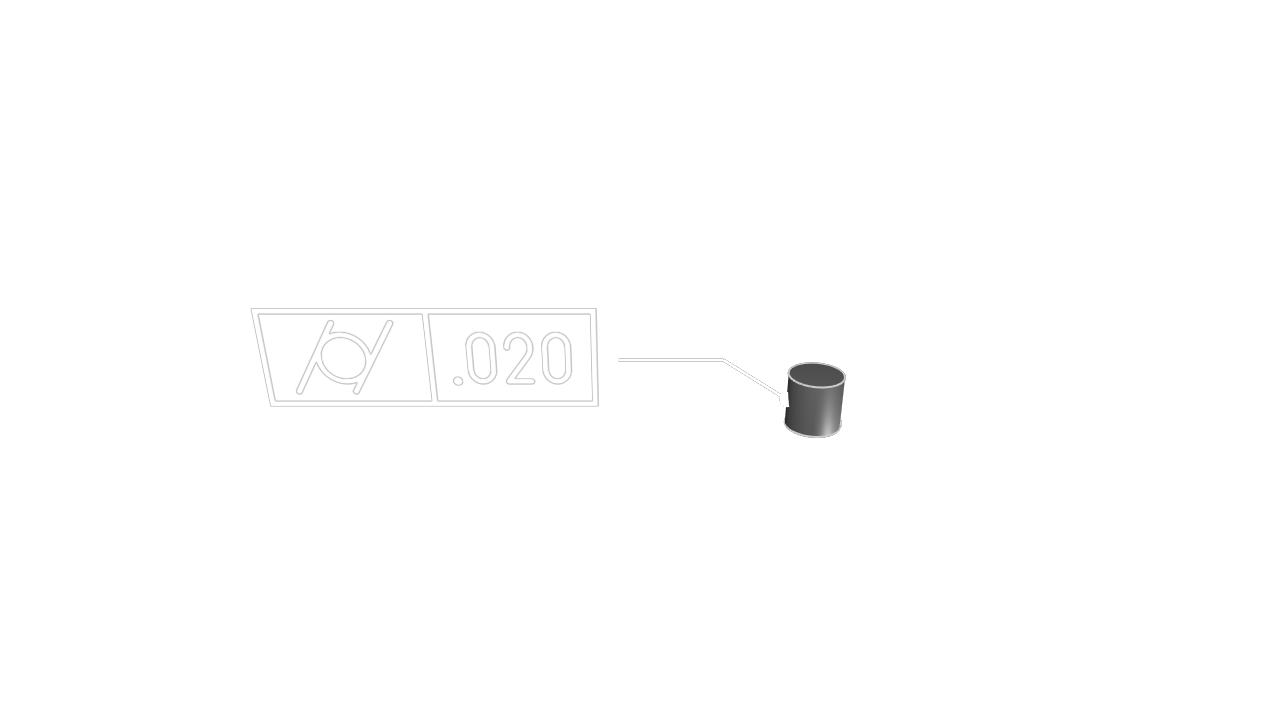
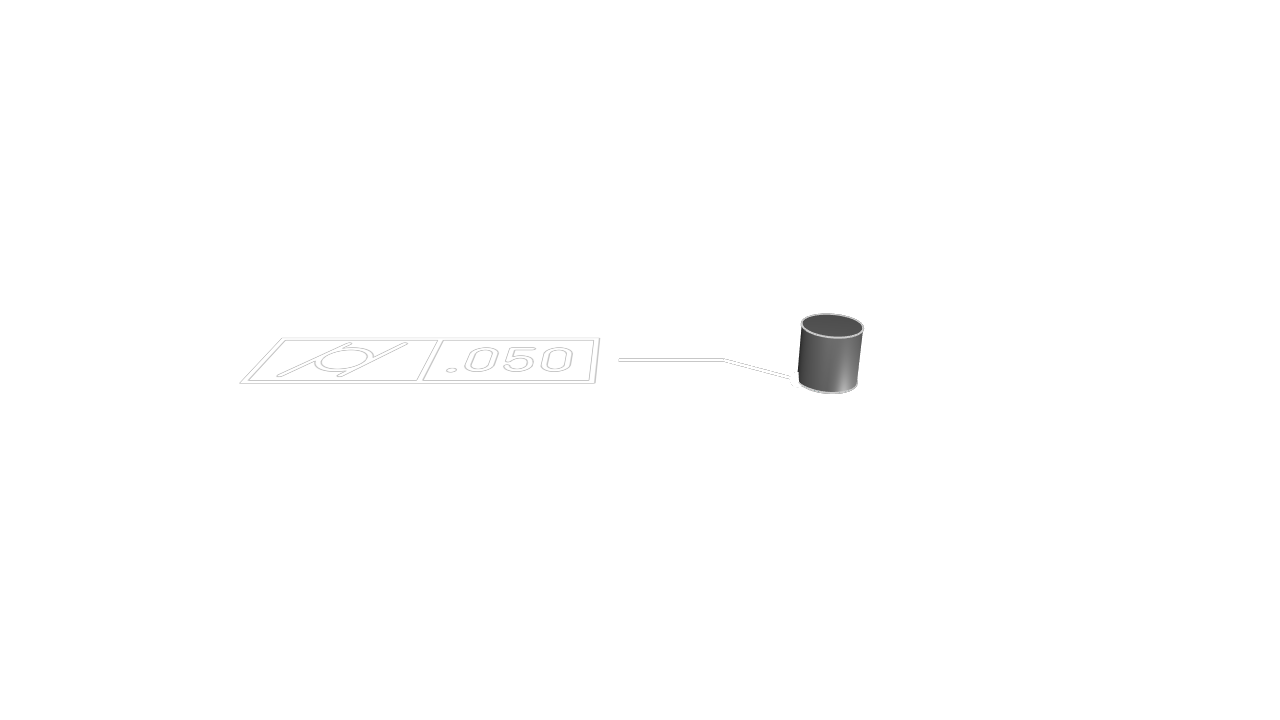
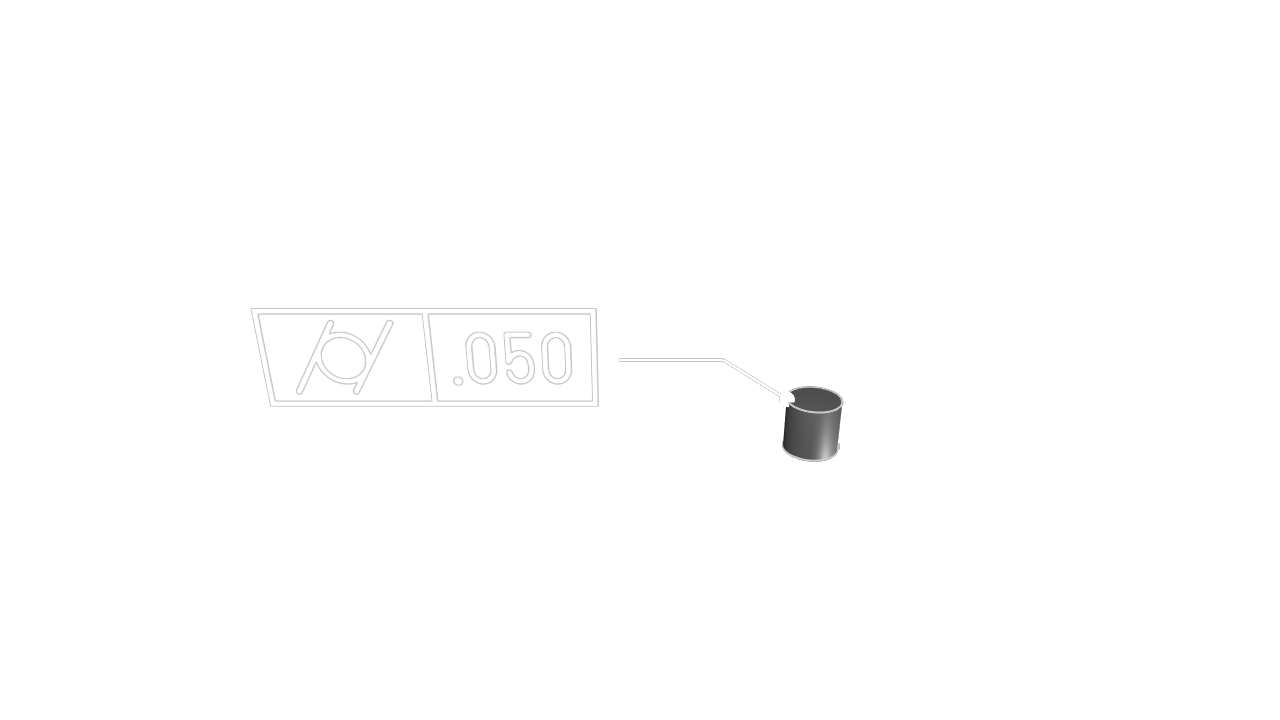
GD&T annotation specifying how closely a feature must conform to a perfect cylinder.
This is part of model-based definition (MBD).
Cylindricity is a form tolerance. It controls how much a cylindrical
surface may deviate from a perfect cylinder, combining roundness,
straightness, and taper into a single requirement. Every point on the
surface must lie between two coaxial cylinders whose radii differ by the
given tolerance. When applied to a round face, such as the wall of a
cylinder, the whole surface must meet that requirement. When applied to a
circular edge, that edge must lie within the same zone.
Cylindricity is a form tolerance, so it does not reference datums.
Arguments
| Name | Type | Description | Required |
|---|---|---|---|
tolerance | number(Length) | The amount of deviation from a perfect cylinder that is acceptable. | Yes |
faces | [TaggedFace; 1+] | The faces to be annotated. | No |
edges | [Edge or any; 1+] | The edges to be annotated. Edge specifier objects ({ sideFaces = [...], endFaces? = [...], index? = 0 }) are experimental; do not use them in generated or user-facing KCL yet. | No |
precision | number(_) | The number of decimal places to display. The default is 3. Must be greater than or equal to 0 and less than or equal to 9. | No |
framePosition | Point2d | The position of the feature control frame relative to the leader arrow. The default is [100mm, 100mm]. | No |
framePlane | Plane | The plane in which to display the feature control frame. The default is XY. Other standard planes like XZ and YZ can also be used. The frame may be displayed in a plane parallel to the given plane. | No |
leaderScale | number(_) | Visual scale of the leader dot. The default is 1.0, which maps to the calibrated normal dot size. The value is normalized against fontSize so the dot stays consistent as text size changes. Must be greater than 0. | No |
fontSize | number(Length) | The model-space height to use for annotation text. The default is 10mm. Explicit units are supported; bare numbers use the file's default length unit. This changes the scene size, not the internal raster texture quality. | No |
annotationName | string | Human-friendly name for this annotation in exports and model metadata. This is not displayed visually. | No |
Returns
[GdtAnnotation; 1+]
Examples