Angularity controls how close selected faces or edges stay to a specified basic angle relative to a datum. Use it for bent tabs, angled pads, ramps, and mating surfaces that must hold an orientation other than parallel or perpendicular.
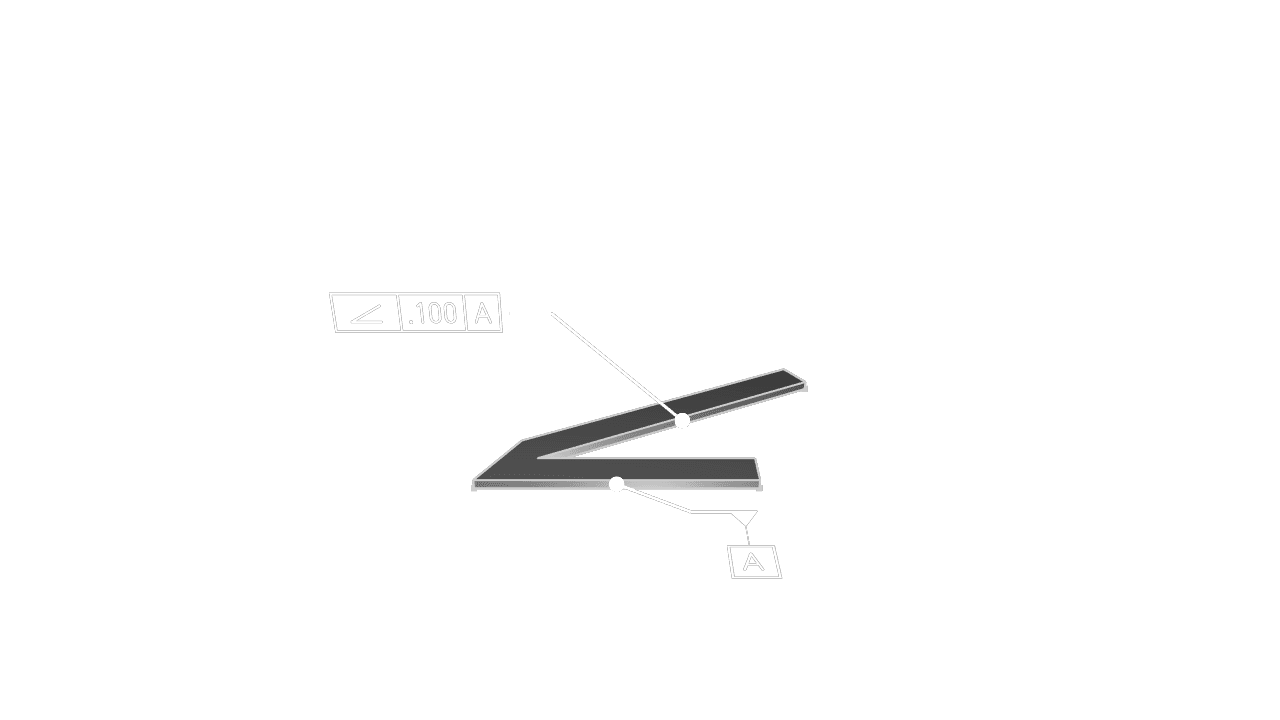
Faces Or Edges
Select the face or edge whose angled orientation should be controlled. Choose the geometry that directly represents the manufactured feature being inspected.
Tolerance
Set the allowed angularity zone size in the current unit system. The value defines the width of the tolerance zone shown in the feature control frame. It is a length, not a plus-or-minus angle.
Datums
Add the datum label or labels that define the reference orientation. Angularity normally needs at least one datum to make the angled relationship meaningful.
Precision
Choose how many decimal places to display for the tolerance value.
Frame Position
Place the feature control frame near the controlled feature while keeping it clear of the model outline.
Frame Plane
Choose the display plane for the annotation. Use XY, XZ, or YZ to keep the frame legible in
the intended view.
Leader Scale
Adjust the visual scale of the leader dot.
Font Size
Set the model-space height of the annotation text.
Are you interested in code?
Zoo Design Studio writes KCL behind the scenes. An Angularity annotation uses gdt::angularity
with selected faces or edges, a tolerance, and datum references. The basic angle comes from the
model geometry or drawing definition.
Want to find out more about the gdt::angularity function?
Check it out in our KCL docs.